
As part of the project, a comprehensive questionnaire survey was conducted in Slovakia, Poland, and Romania to explore how Ukrainian students are integrated into higher education systems and how this process is perceived by different stakeholders. The survey targeted three groups: Ukrainian students studying at universities, domestic students, and academic staff. By combining these perspectives, the research captures not only the experiences of Ukrainian students themselves but also the views of their peers and teachers.
The questionnaires examined key dimensions of inclusion, such as academic adaptation, social integration, language and communication, emotional well-being, institutional support, perceived fairness, and future prospects. The aim was not only to assess current conditions but also to identify areas where universities can further improve inclusive practices.
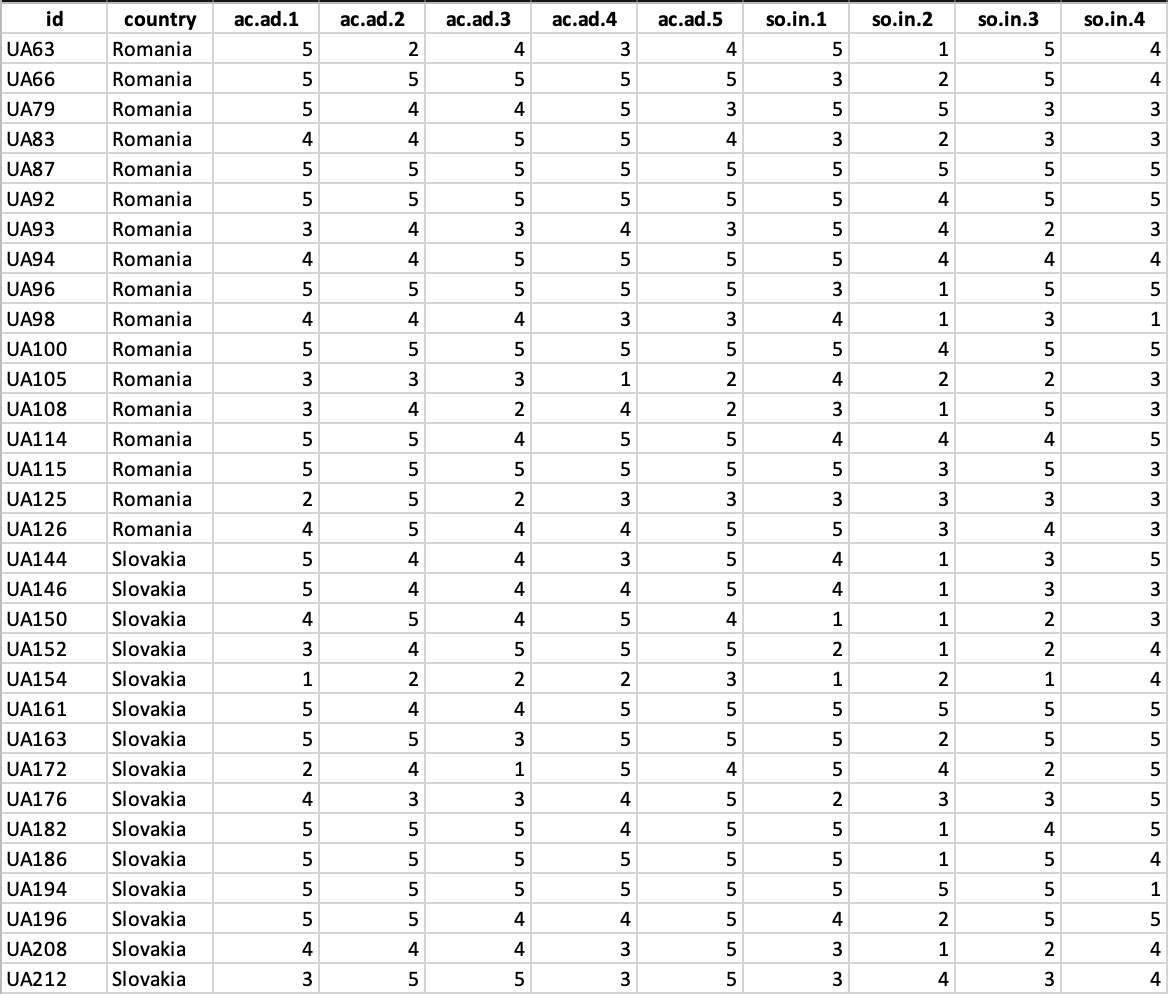
On this page, we provide the full questionnaires in English, anonymised raw datasets, and summary reports for each participating country. Making these materials openly available supports transparency, enables further research, and contributes to evidence-based discussions on the inclusion of displaced and international students in European higher education.
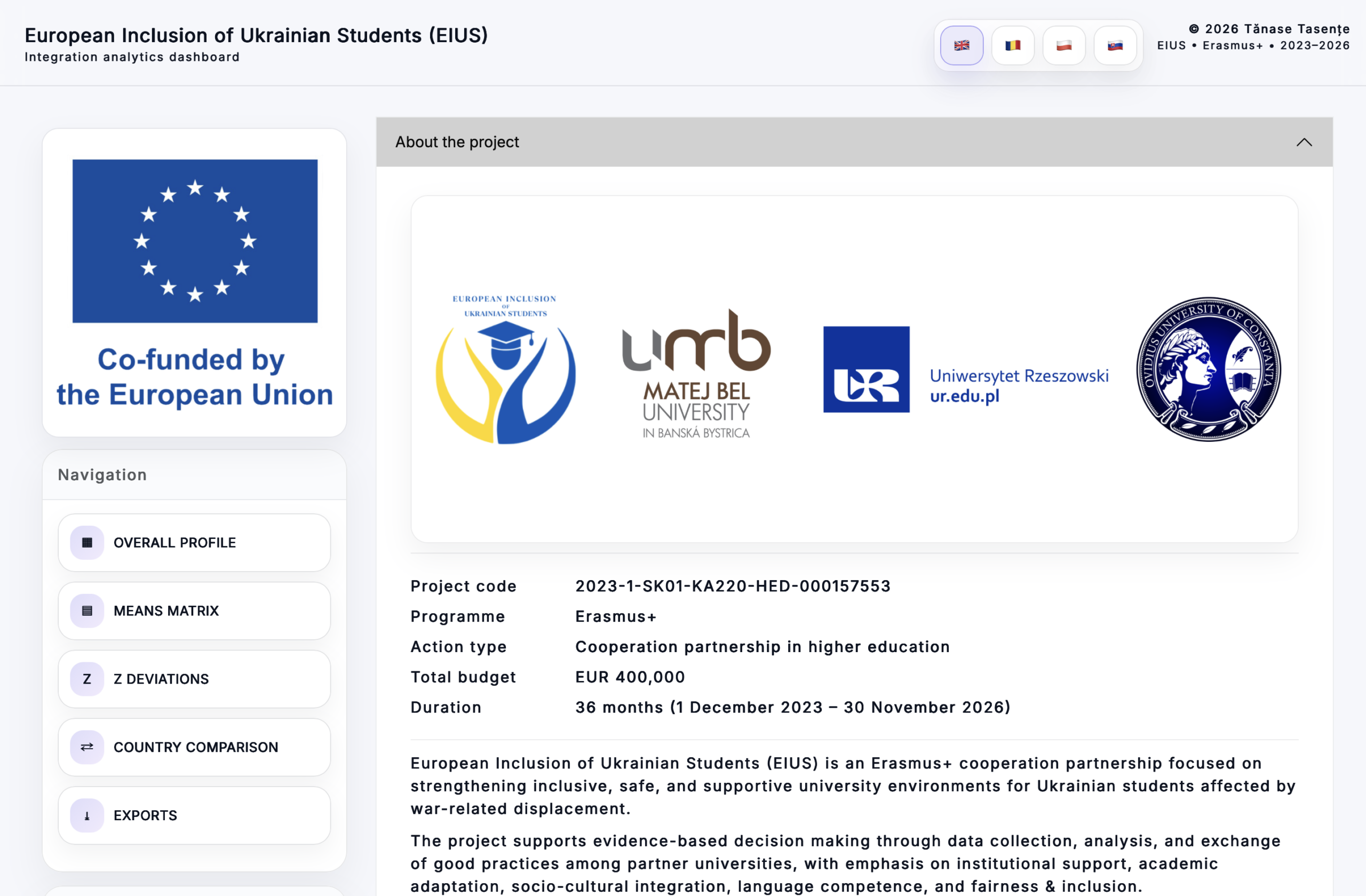
Integration analytics dashboard
- Overall profile.
- Means matrix.
- Z deviations.
- Country comparison.
- Exports
REPORTS
The country reports presented below summarise the main findings from Slovakia, Poland, and Romania. Each report provides a structured overview of the national context, key quantitative and qualitative results, and identified strengths and challenges in the inclusion of Ukrainian students within the respective higher education systems. While based on a common research framework and harmonised methodology, the reports also reflect country-specific dynamics and institutional environments. Together, they offer a comparative perspective that supports mutual learning among partner universities and provides practical recommendations for improving inclusive policies and support mechanisms at both institutional and European levels.
REPORT
– group from Poland
REPORT
– Slovakia